
Upcoming Webinar on Thursday, March 12 at 11am ET
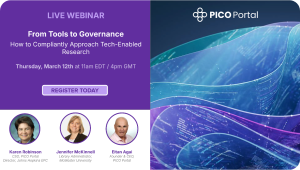
About the Webinar
As AI becomes embedded in evidence synthesis workflows, the conversation is shifting. The question is no longer whether AI will be used, but how institutions, libraries, and research teams can use it responsibly, transparently, and in alignment with evolving standards.
Governance structures have not fully caught up with the pace of technological change. In some cases, legacy rules are being applied to tools that function very differently. In others, institutions are still determining what compliance means in practice, whether related to copyright, data security, validation, reporting standards, or public trust.
This session will explore how leaders are navigating this transitional moment. We will examine what “AI governance” means within evidence synthesis, how different types of AI require different oversight approaches, and how institutions are balancing innovation with accountability.
Who You’ll Hear From
- Karen Robinson, PhD, Professor, Johns Hopkins University School of Medicine
- Jennifer McKinnell, Library Administrator, McMaster University
- Eitan Agai, CEO & Founder of PICO Portal
What You’ll Learn
- What we mean by “tech-enabled research” and how AI differs from earlier automation tools
- How compliance intersects with copyright, research standards, and institutional policy
- Practical governance considerations for libraries and research teams
- How institutions are managing workload pressure, equity concerns, and reporting requirements
- Why transparency, documentation, and personal responsibility are essential to maintaining trust
Whether you are a librarian, researcher, methodologist, or institutional leader, this webinar will provide a grounded discussion on moving from experimentation toward responsible governance in the era of AI-enabled research.
Date and Time:
Thursday, March 12th, 2026
11 am – 12 pm Eastern Time (New York)
Explore PICO Portal
Whether you’re conducting your first systematic review or scaling evidence synthesis across teams, PICO Portal’s advanced technology and specialized services are designed to enable faster, more reliable, and fully aligned research that upholds scientific rigor.
Book a Demo